
REPORT : ALOK SEMWAL
One phone call. One link. One moment of trust — and everything you spent a lifetime building is gone.
It sounds like something that happens to other people. Until it happens to you.
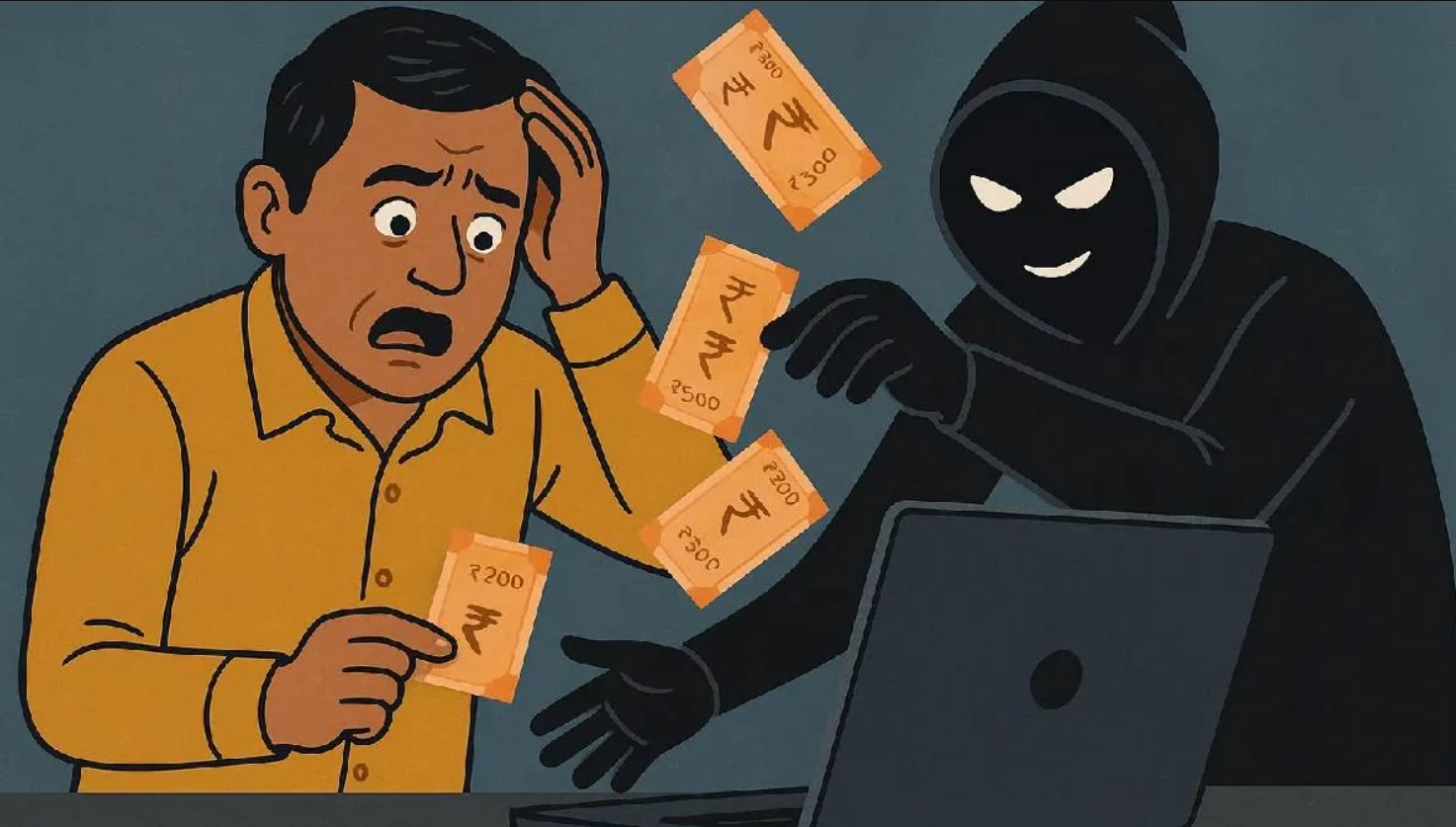
Cyber criminals operating across Uttarakhand are robbing residents at a pace that is difficult to wrap your head around — ₹1.14 lakh every hour, around the clock, every single day. Over the last five years, nearly 90,000 people have filed complaints, and the collective damage has surpassed ₹500 crore. That’s ₹27 lakh disappearing each day, ₹100 crore each year. And despite all of it, barely ₹70 crore has found its way back to the victims. The rest? Gone without a trace.
The 8th Pay Commission Bait
visious fraudsters know their audience. Right now, government employees are being specifically targeted. Messages are arriving on phones claiming to carry important updates about the 8th Pay Commission — salary revisions, arrears, benefits. All you have to do is download the attached file. The moment you do, your phone belongs to them. Your banking apps, your passwords, your OTPs — all of it accessible within seconds. The account gets wiped before you even realize what happened.
STF on hunt , But the Real Predators Are Hiding Abroad
Uttarakhand STF’s cyber unit has been relentless. In 2025 alone, they fanned out across nine states — from Delhi and UP to Karnataka and West Bengal — and brought back 18 arrests. Individual cases involved losses anywhere between ₹14 lakh and ₹1.47 crore. The accused had been impersonating police officers, bank officials, and corporate representatives with convincing scripts designed to either scare or seduce victims into sending money.
But here’s where the investigation hits a wall. Most of those arrested are small players — people who simply lent their bank accounts to the operation, knowingly or otherwise. The men actually running these networks are in Cambodia, Hong Kong, and other countries beyond easy reach, moving stolen money through a maze of accounts before it disappears offshore. By the time investigators untangle the trail, the money is long gone and jurisdiction becomes a nightmare.
The WhatsApp Group That Promised to Double Your Money
The investment scam playbook is almost insultingly simple — and yet it keeps working. A stranger messages you: put in ₹5,000, walk away with ₹15,000. You’re added to a WhatsApp or Telegram group. Everyone there seems to be making money. Screenshots pour in showing impressive returns. The enthusiasm feels real. The social proof feels overwhelming. So you invest. And then, quietly, the group goes silent, the number stops responding, and your money has already been split across a dozen accounts and moved on.
“You’re About to Be Arrested” — The Cruelest Trick of All
Perhaps no tactic is more vicious than the digital arrest scam. The call comes from someone claiming to be a senior police officer. Your name has come up in a drug case, a money laundering case, something serious. You can be arrested within the hour — unless you cooperate and transfer funds immediately as part of the “investigation.” Pure, cold fear takes over. Rational thought goes out the window. And in that panicked state, people have handed over lakhs to voices on a phone.
Alongside this, fraudsters are sending fake RTO challan links that harvest your banking credentials the moment you click, posing as bank representatives to extract OTPs under the guise of KYC updates, and even planting fake customer care numbers on Google so that when you search for help, you end up calling them instead.
The Only Defense That Actually Works
Cyber ASP Kush Mishra puts it plainly — no legitimate bank, government agency, or company will ever ask for your OTP, password, or money over a phone call. Ever. Before investing anywhere, look up the company’s SEBI registration. Never trust a customer care number you found on Google without cross-checking it on the official website. And if your gut tells you something is off, it probably is.
If you suspect fraud, dial 1930 without wasting a single minute. A quick complaint can trigger an account freeze and give you a fighting chance of getting your money back. Wait too long, and that window closes.
These criminals are not slowing down. They are getting sharper, more patient, and more convincing with every passing month. The only thing standing between them and your savings is the decision to pause before you click, question before you trust, and verify before you act.