Dehradun. (Report: Alok Semwal)
If you have ever sat outside a tehsil office in Uttarakhand — waiting for a clerk to pull out a file, only to be told to come back next week — you already understand what this is about. Land disputes in this state have a way of outlasting the people who started them. A boundary argument between two brothers becomes a case that their children inherit, and their children after them. The paperwork multiplies, the hearings stretch on for years, and the person with the least money and the least time is almost always the one who suffers most.
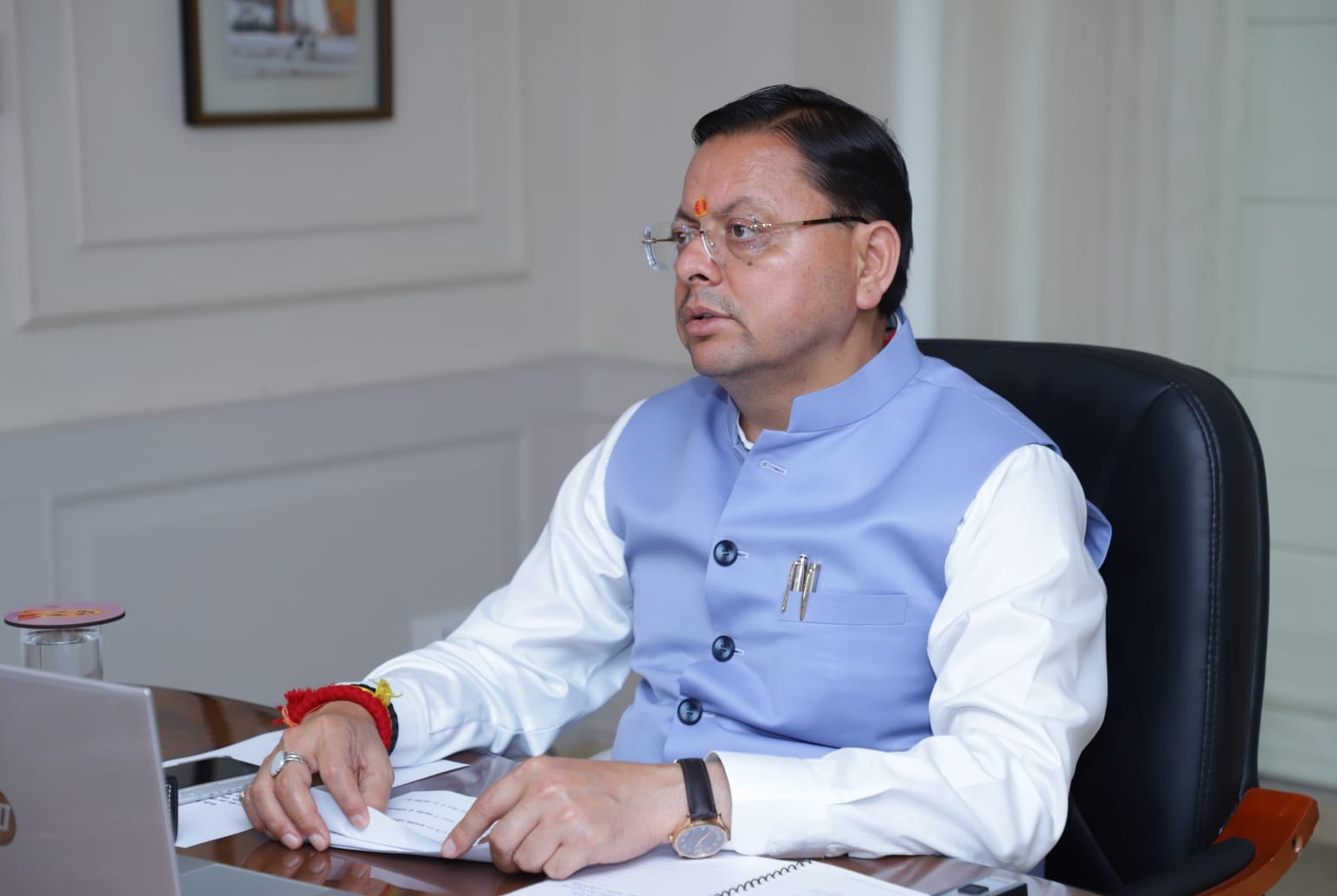
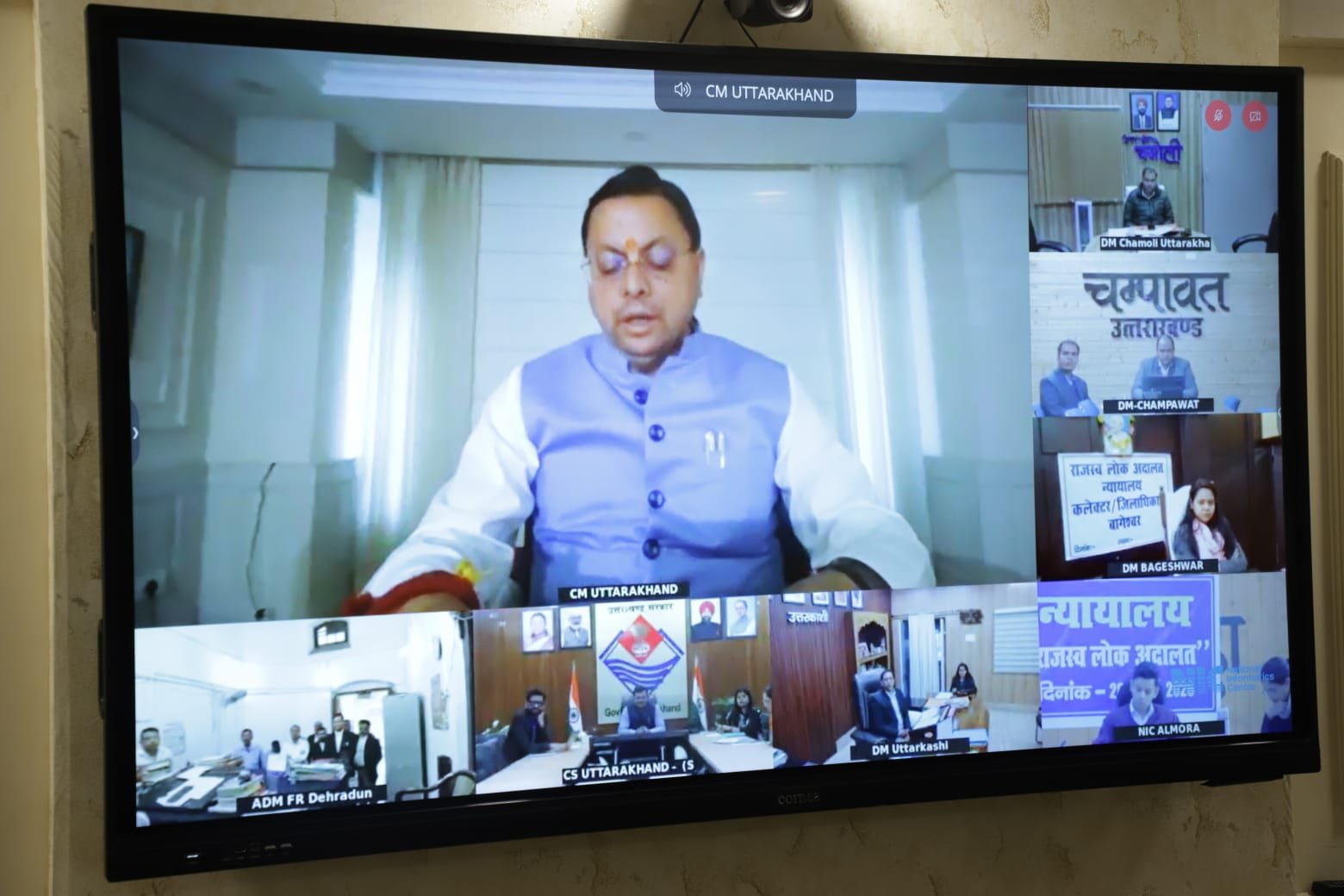
It was with this reality in the backdrop that Chief Minister Pushkar Singh Dhami, on Friday, launched the statewide ‘Revenue Lok Adalat’ through video conferencing — an initiative aimed at cutting through years of accumulated legal fog and delivering decisions, not just dates.
The Scale Is Hard to Miss
210 locations. 13 districts. All running on the same day, at the same time. The government has set a target of resolving around 6,933 cases through this exercise — and for once, the numbers suggest this is more than a press-release moment.
Dhami put it plainly at the launch: a revenue dispute is never just a dispute. Underneath every case number in those thick files is a farmer’s field, a widow’s share of the family home, a young man’s inheritance — things that cannot be reduced to procedural backlogs. That framing, at least, was the right one.
400 Courts and Still 50,000 Cases Gathering Dust
Here is the uncomfortable truth that the launch could not paper over. Uttarakhand already runs over 400 revenue courts — from the Revenue Council at the top, down through Divisional Commissioner courts, Collector courts, and all the way to Tehsildar and Deputy Tehsildar courts at the ground level. It is not a small system. And yet, more than 50,000 cases are sitting unresolved in it.
The Lok Adalat will not just deal with land. Its scope covers excise cases, food supply disputes, stamp duty matters, cases under the SARFAESI Act, the Goonda Act, the Electricity Act, the Senior Citizens Act, and the Rent Control Act. That breadth matters — because for most ordinary people, these are exactly the kinds of legal tangles that consume years of their lives without ever reaching a conclusion.
No More Standing in Line at the Tehsil
One practical step that deserves attention is the launch of the ‘Revenue Court Case Management System’ — an online portal through which citizens can register their cases without setting foot in a government office.
For someone living in a village three hours from the nearest tehsil, this is not a small thing. Every hearing currently means a day lost, money spent on travel, and very possibly a trip that ends with being told the officer is unavailable. If the portal works the way it is supposed to, it could quietly change the experience of dealing with the revenue system for thousands of people in the hills.
Dhami described the move as consistent with the government’s stated philosophy of Minimum Government, Maximum Governance — which, stripped of the jargon, simply means making the system work better with less friction for the person at the receiving end.
A Detail Worth Noting — Mutation Before the Mourning Ends
Among all the directives issued on Friday, one stood out for reasons that had nothing to do with administration and everything to do with basic empathy.
When a landowner dies, his family is traditionally expected to spend the first thirteen days — the Tehrahveen, or Pipalpaani — in mourning. What they are also currently expected to do, almost immediately, is begin the paperwork to transfer the property into the heirs’ names. Government offices do not pause for grief.
Dhami’s instruction was simple: complete the mutation process and hand the new Khatauni to the family before those thirteen days are over. Do not make a household that is still lighting incense sticks also chase clerks across three offices. It is the kind of directive that costs nothing to implement and means everything to the family on the receiving end.
Officers were additionally told to wrap up land measurement and encroachment disputes within one month — a tight deadline that will test whether the urgency of the launch translates into urgency on the ground.
The Chief Secretary’s Promise — and the Weight It Carries
Chief Secretary Anand Bardhan, joining the meeting virtually, used language that left no wiggle room. The backlog, he said, would be cleared on a war footing. Land disputes would get the highest priority. Every District Magistrate has been told to resolve all pending revenue cases within the next month.
War footing is a phrase that gets used often in government circles. Whether it means the same thing in practice as it does in press conferences is what the next few weeks will reveal. Revenue Secretary Ranjana Rajguru was also present at the meeting.
The Honest Question That Remains
Chief Minister Dhami tied the initiative to Prime Minister Modi’s well-known formulation — Sabka Saath, Sabka Vikas, Sabka Vishwas, Sabka Prayas — and built the campaign around four pillars: simplification, resolution, disposal, and satisfaction.
Nobody would argue with any of that. The intent is sound, the structure is in place, and the targets are specific enough to be held accountable. But Uttarakhand’s land records carry the weight of generations — disputed boundaries, unregistered transfers, inheritance splits that were never formally recorded, revenue entries that do not match the ground reality.
Clearing 6,933 cases in one sweep is a start. Whether it becomes a habit — or just a headline — is the question that 50,000 waiting families are quietly asking.